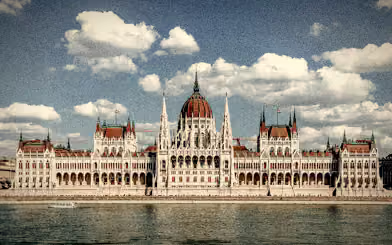
The Hungarian Parliament’s history reflects Budapest’s growth and Hungary’s political changes.
Explore the Hungarian Parliament’s past
- 1867: The Austro-Hungarian Compromise prompted plans for a new parliament building.
- 1873: Budapest was created by joining 3 cities, giving the Parliament building its distinctive position on the bank of the Danube River.
- 1885: Work began on a neo-Gothic Parliament designed to rival London’s Parliament.
- 1896: The nearly completed Parliament was inaugurated to mark Hungary’s 1000th birthday.
- 1902: Imre Steindl, the lead architect, went blind and later died in 1902, before the building was finished.
- 1904: After 20 years of craftsmanship, the Hungarian Parliament building was complete.
- 1918- 1945: The Parliament endured World War I, the collapse of the Austro-Hungarian Empire and the upheavals of World War II.
- 1949: During the communist era, a controversial red star was placed on the dome.
- 1989: Hungary embraced democracy after communism fell, and the red star was removed from the building.
- Present: The Budapest Parliament building draws millions of tourists worldwide, who come to see its striking architecture and explore its history.
History of the Hungarian Parliament
An idea takes shape
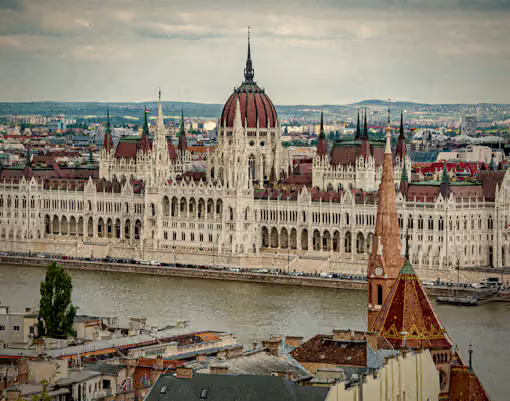
1867 After the Austro-Hungarian Compromise of 1867, Hungary sought a new parliament building in the country's centre to represent its newly won independence and autonomy within the empire.
Choosing the site
1873 Budapest was officially unified in 1873, and the parliament was assigned a site beside the Danube, opposite Buda Castle. Its position reflected the parliament's role in the newly unified Hungary.
Work begins
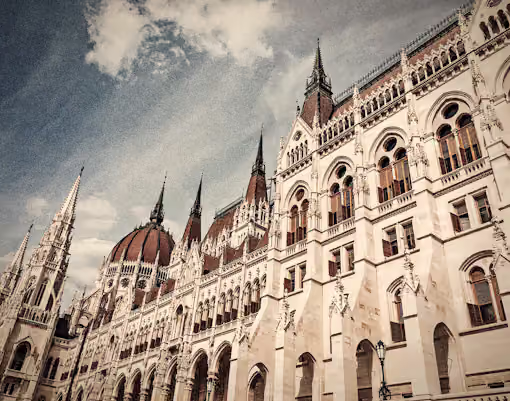
1885 Construction of the Hungarian Parliament building began in 1885 after architect Imre Steindl won a design competition. He designed the building in a neo-Gothic style to rival London's Parliament.
A landmark anniversary
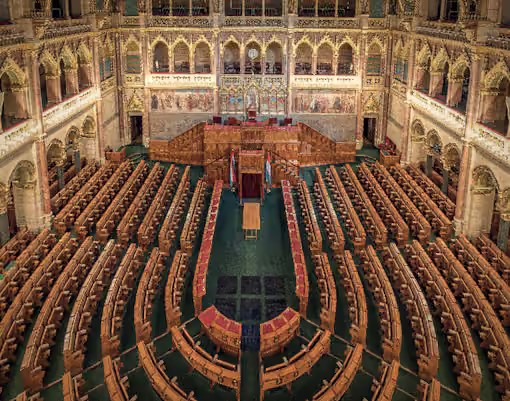
1896 The nearly complete Parliament was formally opened during a grand celebration of Hungary's 1000th anniversary. The event marked a millennium of Hungarian statehood and presented the country's grandeur and cultural heritage to the world.
Completion of the building
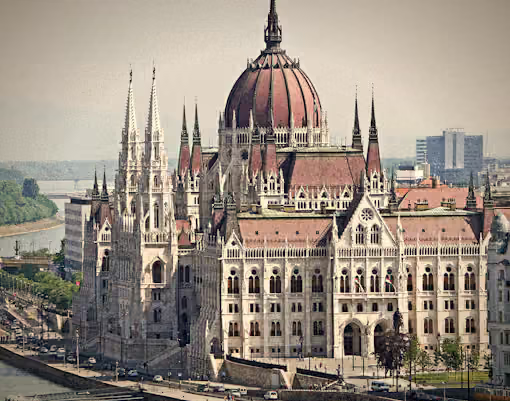
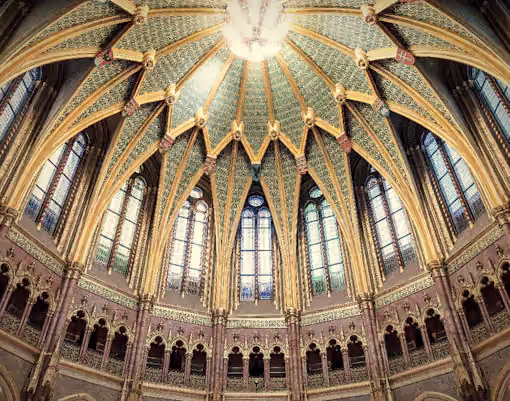
1904 After nearly 20 years of detailed work by over 1,000 workers, the Hungarian Parliament building was complete. Its 96-meter-high dome was finished, becoming a feature of Budapest's skyline.
War brings change
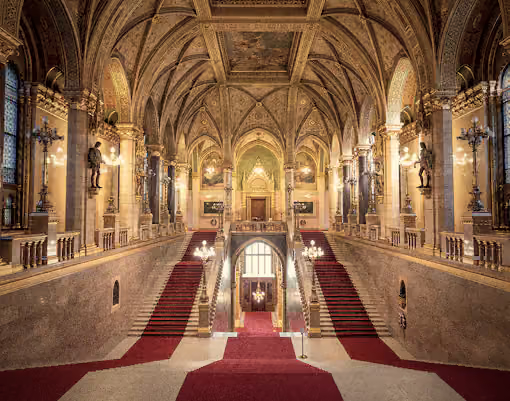
1918-1949 After WWI, the Austro-Hungarian Empire collapsed, and the Hungarian Parliament became the seat of the independent Hungarian government. Allied bombing during WWII severely damaged the building, which was restored in 1945.
Democracy returns
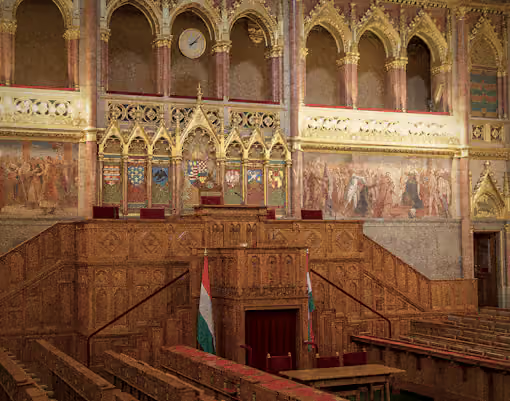
1989 The fall of the Iron Curtain ended Communist rule, and Hungary adopted democracy. The Budapest Parliament became a symbol of the country's regained sovereignty and democratic journey.
A source of national pride
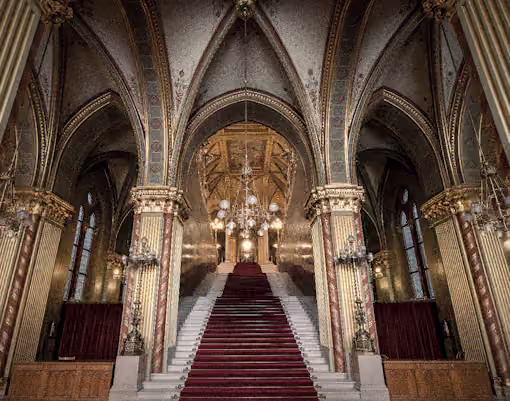
Present The Hungarian Parliament remains the seat of Hungary's National Assembly. It also represents resilience and reflects the country's history, architectural splendor, and democratic principles.
Architecture of the Hungarian Parliament building
- In the late 19th century, Hungary sought greater autonomy within the Austro-Hungarian Empire and wanted a Parliament that would express national pride.
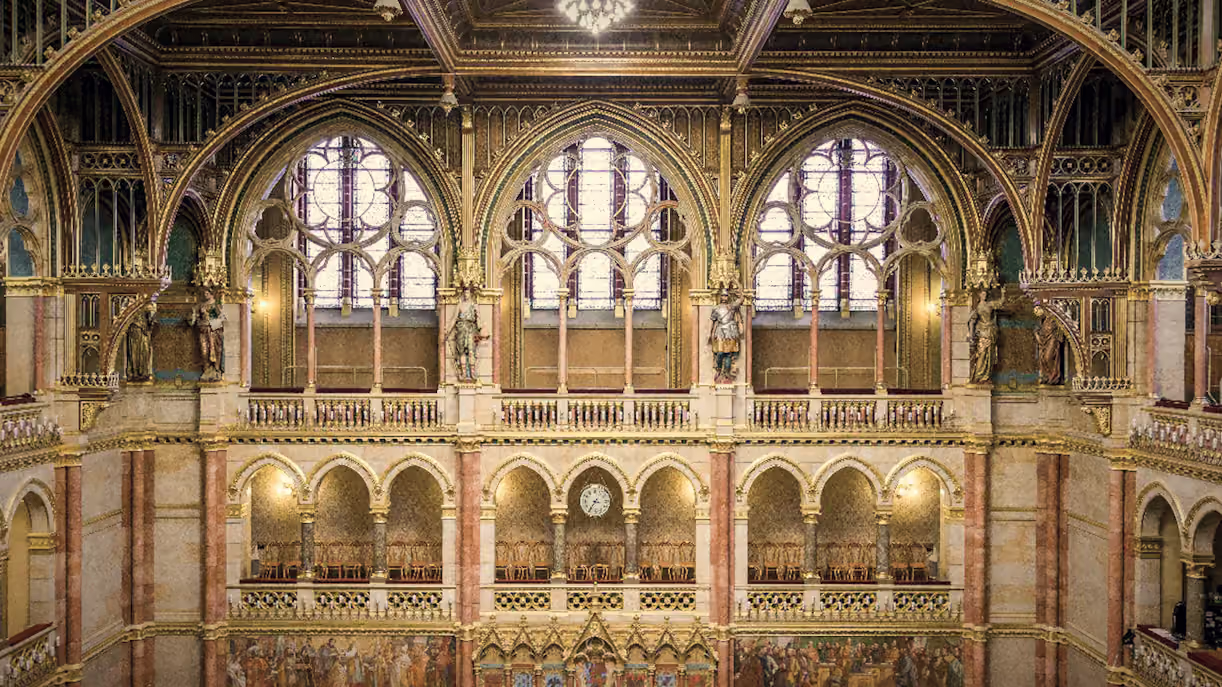
- Following a competition, Hungary chose a design by architect Imre Steindl, inspired by London's Parliament. The design combined neo-Gothic features, including pointed arches and spires, with Renaissance and Baroque elements. It reflected Hungary's aim to be seen as a modern European nation while drawing on its architectural heritage.
- The building's scale, its 40 million bricks and its detailed decoration reflected Hungary's growing power and ambition. Construction took nearly two decades and became a national project. The building expressed Hungary's emerging identity and aspirations for the future.
Parliament remains a source of national pride, though the building has suffered wear over time. A restoration project lasting decades addressed the damage. Completed around 2002, the work aimed to restore the Budapest Parliament building, including rebuilding features simplified after WWII. Plans are underway to renovate the interior, ensuring this architectural marvel continues to inspire awe for generations to come.
The Hungarian Parliament today
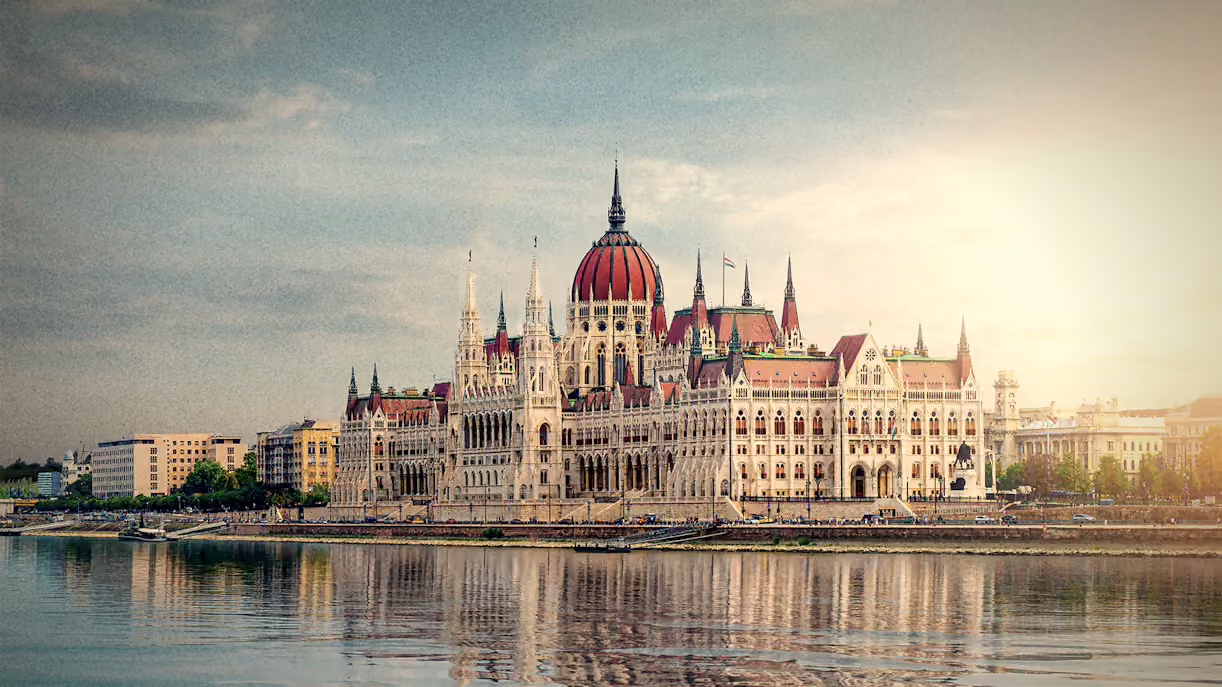
Budapest's Hungarian Parliament building has neo-Gothic walls and a long history shaped by Hungary's triumphs and struggles.
Hungary's National Assembly meets in the building today. Visitors can admire its architectural details and learn about Hungarian history and culture, gaining a deeper understanding of the country.
Hungarian Parliament tickets
Hungarian Parliament Audio Guided Tour
Combo (Save 8%): Hungarian Parliament Guided Tour + Danube River Sightseeing Cruise Tickets
Combo (Save 8%): Hungarian Parliament Multilingual Audio Guided Tour + Széchenyi Spa Entry Tickets
Budapest Grand City Tour with Parliament Visit
What should you know about the History of the Hungarian Parliament?
Which events and incidents shaped the history of the Hungarian Parliament?
Hungary's Parliament has witnessed major events, including World War I, the fall of the Austro-Hungarian Empire, the interwar period, World War II, the communist era, and Hungary's transition to democracy.