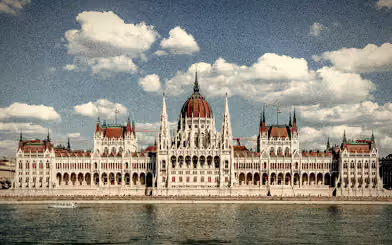
Which sights await you in the Dome Hall?
The Hungarian crown jewels have been on display in Parliament’s Dome Hall since 1 January 2000, when they were moved from the Hungarian National Museum. The glass case contains the Holy Crown, also known as the Crown of St. Stephen, the sceptre, the orb and the coronation sword. The coronation mantle remains at the National Museum.
- The Holy Crown: The bent cross at its peak makes it distinctive; it served in the coronations of more than fifty Hungarian kings.
- The sceptre: Gold holds a rock-crystal head, and no other item in the set is older.
- The orb: A double cross rises from its gilded spherical body.
- The sword: This 16th-century blade took the place of the medieval sword that was lost.
How the Holy Crown’s past unfolded
During the Middle Ages, two separate parts were joined to form the crown. It came to represent the Hungarian state in law, rather than serving only as a symbol of its kings. The US Army took possession of it at the close of the Second World War, and it stayed in the United States before its return to Hungary in 1978. The crown has occupied a position beneath the dome, at the heart of the Parliament building, since 2000.
Tips for your visit
- Access to the regalia comes only as part of a guided Parliament tour, not through a separate ticket.
- Beside the case, the Crown Guard remains on duty, with changes taking place regularly throughout the day.
- Visitors may take photographs in most areas of the building; the Dome Hall is excluded.
- With tours lasting about 45 minutes, your time by the crown will be short, so position yourself near the group’s front.
To explore the remainder of the route, consult the Hungarian Parliament’s interior or use the planner for your visit.