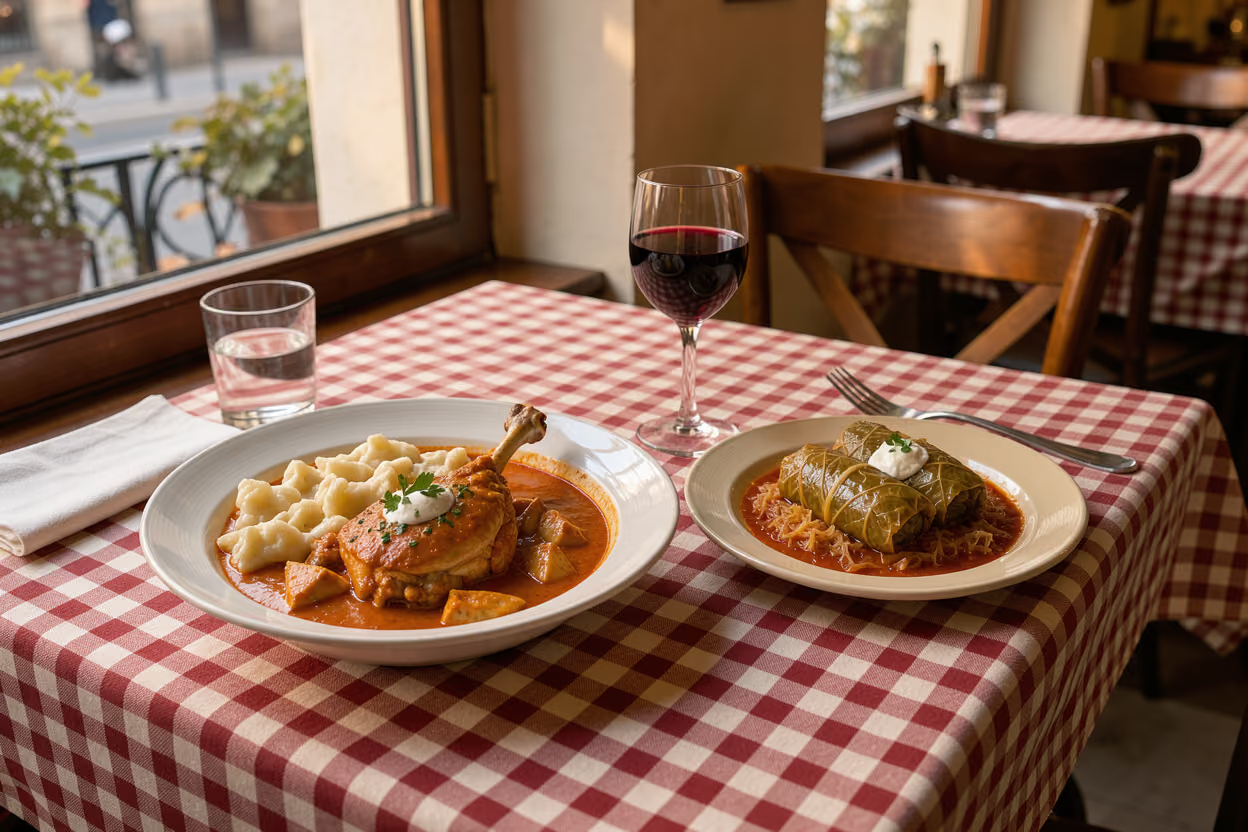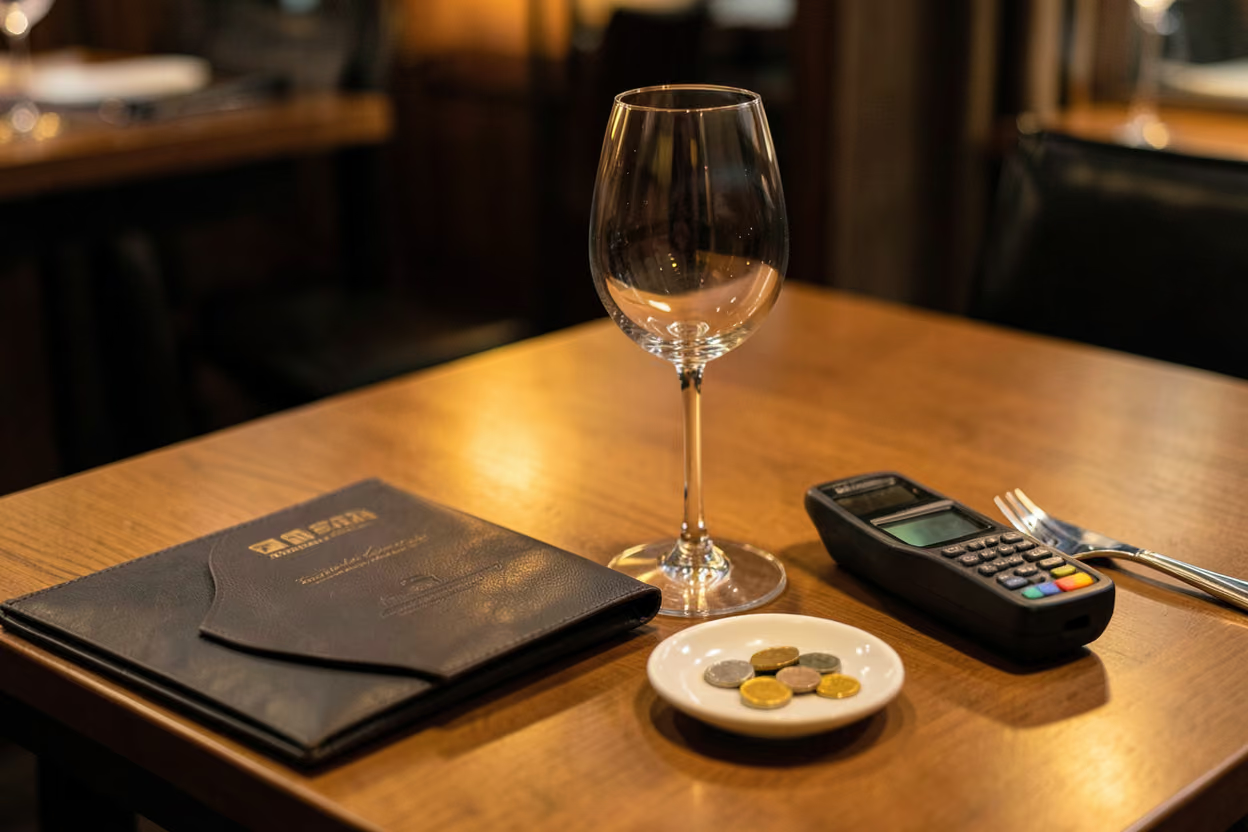
The awkward moment is often at the card terminal: it may ask for a tip even when the bill already includes a service charge. Treat that prompt as optional, choose to pay in Hungarian forints (HUF), and review the final amount before approving.
Quick answer
- Look for “szervizdíj” or “service charge” on the menu and receipt. It is commonly around 10–15%, though the rate varies by venue; don’t automatically add the same amount again.
- If there is no service charge, about 10% for good table service is customary, but tipping is optional.
- A terminal tip prompt does not mean another tip is due. Choose zero or decline if a service charge is already included and you do not want to add extra.
- Pay in HUF rather than accepting conversion to USD. Cards are widely used, but keep some HUF cash for small purchases or card problems.
- VAT is a tax, not a tip. Don’t use the 5% or 27% figures you may see discussed online to work out gratuity.
Tipping in Budapest: What to Leave for Good Service
The usual restaurant tipping guide
At a restaurant with table service, about 10% for good service is a straightforward guide when no service charge has been added. It is customary, not a legal requirement. You are not expected to tip every business or for every kind of service.
Before deciding what to leave, check whether the menu or bill already includes a service charge. If it does, the displayed total is generally what you should pay; another automatic 10–15% is unnecessary. If service was especially good and you want to recognize it, an extra tip is your choice.
Counter service, cafés, and takeaway
At a counter, takeaway window, or self-service café, tipping is generally optional. Don’t feel obliged to add a percentage just because a payment screen offers one. You can leave something if someone has gone out of their way to help, but it isn’t an automatic part of buying a coffee or collecting food.
Tipping and Service Charge in Budapest: Check the Bill First
Find “szervizdíj” before you order
The Hungarian word “szervizdíj” means service charge. You may also see “service charge” in English or a percentage printed with the menu prices. Check before ordering, especially if you are comparing listed prices or planning how much to leave.
A restaurant service charge is commonly around 10–15%, but the exact rate and how it is displayed vary by venue. There is no verified nationwide fixed rate for 2026, so don’t assume every restaurant uses the same percentage or policy. If the menu is unclear, ask before ordering.
Compare the menu, receipt, and total
When a service charge is included, pay the displayed total without automatically adding another 10–15%. The receipt should make it possible to see what you are being charged for. If the amount does not add up, ask for an itemized bill before paying.
A service charge is a separately disclosed hospitality charge, not VAT. The two are different things, even if both appear as lines on a receipt. The useful distinction is simple: VAT is a tax; a service charge is a venue’s stated charge; a tip is an optional customary payment.
Tipping in Budapest by Card: Handle the Terminal Prompt
When the bill already includes a service charge
A card machine asking for a tip does not prove that another tip is due. Check the receipt first. If the service charge is already included, select zero, decline, or skip the prompt unless you intentionally want to pay extra.
That extra payment is optional. If you do want to leave more for staff, you can give a small cash tip or enter a card tip clearly, making sure you understand whether the terminal is adding it to the amount you have already reviewed.
When there is no service charge
For good table service without a service charge, about 10% is customary if you want to follow local guidance. If the terminal doesn’t offer a clear way to add it, ask the staff how to do so rather than guessing at the buttons.
Before tapping or entering your PIN, look at the final amount on the screen. Keep the receipt until the card transaction settles, particularly if you were asked to approve a separate tip or currency conversion.
Cash or Card in Budapest? Pay in HUF
Choose HUF, not USD, at the terminal
Hungary uses the Hungarian forint, shown as HUF or Ft. If a card terminal offers to charge you in US dollars instead, choose HUF and decline the conversion.
The dollar option is usually dynamic currency conversion: a payment provider offers a conversion at the point of sale, with its own pricing. The exchange rate and any card fees can change, so make the choice each time rather than assuming the screen will pick the better option. Many repeat visitors keep it simple: pay in the local currency and let their own card issuer handle the conversion.
Carry a small HUF cash backup
Cards are widely used in Budapest, but a little cash is useful at smaller venues or if a terminal is unavailable. Keep a modest amount of HUF for small purchases and situations where your card is not accepted. Visa and Mastercard are generally more practical than American Express; if AmEx is your only card, ask whether it is accepted before ordering and have a backup plan.
If you need cash, use a bank ATM or a reputable exchange office. If an ATM or terminal offers to convert the amount to dollars, decline that conversion and choose HUF.
VAT Is Not a Tip: Make Sense of the Receipt
Separate tax, service charge, and gratuity
VAT is a tax, not a gratuity. A service charge is a separately disclosed hospitality charge, while a tip is an optional payment made in recognition of service. Don’t treat any one of these as a substitute for understanding the others.
Travel discussions often mention 5% or 27% VAT, but neither figure is a tip rate. VAT treatment depends on the item and legal conditions, and those percentages should not be used to calculate what to leave for staff.
Ask for an itemized receipt if the amount is unclear
Compare the receipt with the menu and ask staff to explain any unfamiliar line before paying. You can ask plainly whether the total includes “szervizdíj” and what a particular charge refers to. There is no verified 2026 nationwide rule setting one service-charge percentage for every restaurant, so the current menu and itemized bill are the best guides to that venue’s policy.
When to Check and How to Pay Without Overpaying
Before ordering
Take a moment to scan the current menu for “szervizdíj,” “service charge,” or a percentage listed beneath the prices. If the policy is hard to find, ask before ordering. A clear answer is better than trying to work it out after the meal.
When the bill arrives
Use this quick check:
- Look for a service-charge line on the receipt.
- Check whether it is already included in the total.
- Decide whether you want to add an optional extra tip.
- Confirm the final amount and select HUF at the terminal.
If something is unexplained, request an itemized receipt and compare it with the menu before approving payment. Don’t approve a total you don’t understand just to keep the queue moving.
Season and venue do not replace checking
Tipping customs do not normally change by season. Summer crowds and December holiday traffic can make it more useful to review a receipt carefully, but they don’t create a new tipping rule. Terraces and restaurants in tourist areas may have their own service-charge policies, so read the menu rather than assuming every place does it the same way.
Common Tipping Mistakes and Simple Alternatives
Mistakes to avoid
- Adding another automatic 10–15% without checking for “szervizdíj.”
- Treating VAT as a tip or assuming a terminal’s tip prompt means you should pay more.
- Accepting a terminal’s USD conversion without comparing it to paying in HUF.
- Assuming every venue accepts AmEx.
- Approving an unexplained amount instead of asking for an itemized bill.
Practical alternatives
If you’re unsure about a restaurant’s policy, ask before ordering or choose a place that displays its prices and service-charge information clearly. Use HUF cash for small purchases or when a venue cannot take your card, and use Visa or Mastercard where possible for broader acceptance. At counter-service and self-service venues, tip only if you want to recognize notably helpful service.
Frequently asked questions
Do you tip in Budapest if a service charge is already included?
Usually, you do not need to add another tip. Check the menu and receipt for “szervizdíj” or “service charge”; any extra tip is optional.
How much should I tip in Budapest when there is no service charge?
About 10% for good table service is customary when no service charge has been added. Tipping is not legally mandatory, and the amount is your choice.
Should I tip when a Budapest card terminal asks for a tip?
Only if you want to. Check the receipt first; if a service charge is already included, choose zero or decline unless you intentionally want to add extra.
Is cash or card better in Budapest?
Cards are widely used, but carry a modest amount of HUF for smaller venues or card-terminal outages. Visa and Mastercard are generally more practical than AmEx.
Should I pay in HUF or USD in Budapest?
Choose HUF and decline the terminal’s USD conversion when offered. Dynamic currency conversion pricing and card fees can vary.
Is VAT the same as a tip, and what do 5% or 27% mean?
No. VAT is a tax, not a gratuity, and a service charge is a separate hospitality charge. Don’t use 5% or 27% to calculate a tip; ask for an itemized bill if a tax line is unclear.
Is tipping mandatory in Budapest?
No. Tipping is customary in some situations, especially for good table service when there is no service charge, but it is not legally mandatory.
For tipping in Budapest, the safest routine is simple: check for “szervizdíj,” treat any extra terminal prompt as optional, and review the total before paying. Choose HUF for card transactions and keep a little HUF cash as a backup.
Related guides
- Is Budapest Expensive in 2026
- Things to Do in Budapest
- Budapest 3 Day Itinerary
- Food and drink experiences in Budapest
- Top attractions in Budapest