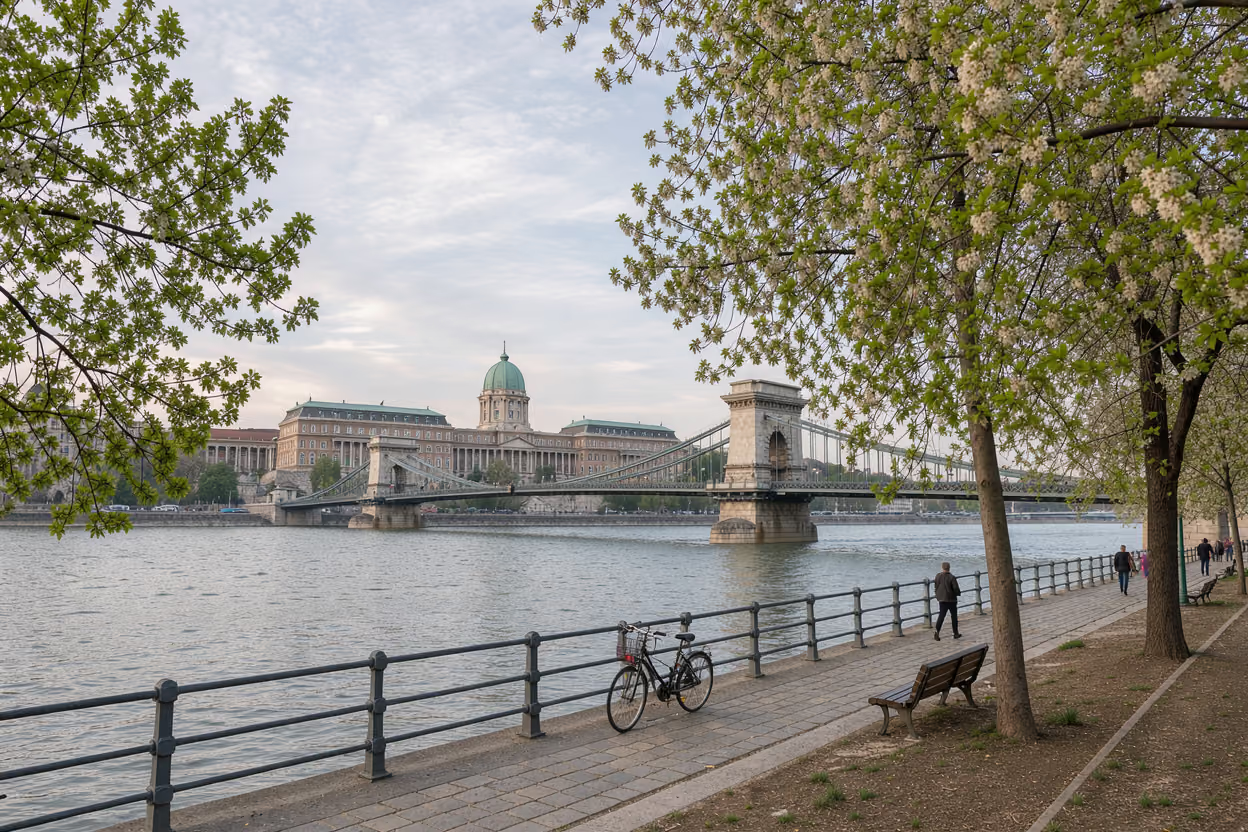
For most visitors, the Budapest History Museum is the strongest pick for medieval and royal history; choose the Hungarian National Gallery if you care more about Hungarian art. You do not need to pay to enjoy the district, and you do not need to buy a ticket from anyone offering access to its public courtyards.
Quick answer
- Ordinary outdoor courtyards and Castle District streets are generally free and listed as open 24/7. Festivals can restrict access or require an event ticket.
- Allow 2–3 hours for a short visit or 4–5 hours for several interiors, viewpoints, and breaks.
- Around 2026, adult admission is HUF 3,800 for the Budapest History Museum, HUF 5,900 for its combined ticket with St. Stephen’s Hall, and HUF 5,800 for the National Gallery.
- Reach Castle Hill by bus 16 or 116, on foot, or by the Funicular from Clark Ádám tér. Check current service, fares, and closures before setting out.
What to See at Buda Castle
The name “Buda Castle” usually refers to the Royal Palace and the wider Castle District on Castle Hill. The palace is the main museum area; farther north, the district’s historic streets lead to Fisherman’s Bastion and Matthias Church. They are nearby, but they are separate attractions with their own admission rules.
The Royal Palace and its courtyards
The Royal Palace is home to the Budapest History Museum and the Hungarian National Gallery. The Hungarian National Library is also in the palace and may host exhibitions. You can walk through the ordinary outdoor courtyards without buying a museum ticket; admission to an interior does not automatically include the others.
The courtyards and Castle District streets are listed as open around the clock, but that does not mean every section is always accessible. Festivals can fence off areas and require an event ticket. If you want the palace’s restored rooms or its collections, plan for a paid visit rather than expecting the exterior walk to include them.
Viewpoints and nearby Castle District sights
The district is rewarding even if you skip the museums. Walk the lanes, pause at the outdoor viewpoints, and take in the views over the Danube and Pest. The historic paving can be uneven, and some streets are steep, so shoes with good grip are more useful here than dress shoes.
Fisherman’s Bastion and Matthias Church sit in the northern Castle District. Neither is part of the Royal Palace, and their admission arrangements are separate. Fisherman’s Bastion has areas with different access rules, so check its current information if you have a particular terrace or time in mind. The surrounding streets remain a good free stroll.
Buda Castle Tickets and 2026 Costs
There is no single Buda Castle ticket that covers the whole district. You can explore the ordinary outdoor areas for free, then pay separately for a museum, palace attraction, or Funicular ride. Prices below are in Hungarian forints and are the researched 2026 figures; confirm them before your visit, as rates and ticket conditions can change.
| Attraction | Adult price | Useful detail |
|---|---|---|
| Outdoor courtyards and Castle District streets | Free | Festival access may be ticketed or restricted |
| Budapest History Museum | HUF 3,800 | Reduced price listed at HUF 1,900 for ages 6–26 and seniors 65–70 |
| History Museum + St. Stephen’s Hall | HUF 5,900 | Listed reduced price is HUF 2,950 for the same groups |
| Hungarian National Gallery | HUF 5,800 | Temporary exhibitions may cost extra |
| Funicular, return | HUF 5,500 | Adult fare; separate from museum admission |
Free outdoor access versus paid interiors
Ordinary courtyards, Castle District streets, and outdoor viewpoints generally have no admission charge. The Budapest History Museum, National Gallery, St. Stephen’s Hall, the National Gallery dome, and the Funicular each have their own ticket or fare rules. Festival organizers may fence off courtyards, so a normally free route can become part of a ticketed event.
If anyone offers to sell you access to public courtyards, skip it. Buy tickets for paid attractions from the venue or its official sales channel.
Museum and palace attraction prices
The History Museum’s museum-only ticket does not automatically include St. Stephen’s Hall. If you want both, look for the combined ticket, which is listed at HUF 5,900 for adults and HUF 2,950 for the eligible reduced-price groups. Check the exact ticket conditions when booking.
The National Gallery’s listed age discount is for eligible EEA visitors under 26 or over 62. U.S. visitors should not assume they qualify. A temporary exhibition may also have a separate or additional charge.
Funicular fares and ticket checks
The researched adult Funicular fare is HUF 5,500 return or HUF 4,500 one-way. Children ages 3–14 are listed at HUF 3,000 return or HUF 2,000 one-way; children under 3 travel free. The cashier’s listed payment terms specify HUF, and one-way ticket availability can vary, so check at the station.
The Funicular is a ride and a view, not a way to avoid every queue: waits can sometimes reach about 30 minutes. It is not included with any museum ticket.
Which Buda Castle Interiors Are Worth Entering?
If you’re asking which monuments are worth entering in Budapest’s Castle District, choose based on what you actually enjoy. The outdoor visit is satisfying on its own; there’s no need to pay for every interior just because you’re there.
Choose the Budapest History Museum for royal history
For Budapest’s medieval and royal past, start with the Budapest History Museum. It is the better choice if you want context for the city and the palace rather than a collection focused on art. The museum is listed as open daily from 10:00 to 18:00; holiday and event schedules can differ.
Choose the National Gallery for Hungarian art
The Hungarian National Gallery is the better fit for visitors interested in Hungarian painting and sculpture. It is normally open Tuesday–Sunday, 10:00–18:00, with last entry listed at 17:00. It is normally closed on Mondays, though temporary exhibitions may occasionally affect the schedule. The dome is listed as open until 17:00, subject to operational changes.
If the gallery is your priority, go earlier in the day rather than trying to squeeze it in near closing. That gives you more time for the collection and avoids arriving after last entry.
Add St. Stephen’s Hall for restored palace interiors
St. Stephen’s Hall is a short visit focused on reconstructed palace interiors. It makes sense if you enjoy decorative historic rooms, and it pairs neatly with the History Museum through the 2-in-1 ticket when available. Its schedule generally follows the palace attractions, commonly 10:00–18:00, but ticket conditions and hours can vary.
How Long to Spend at Buda Castle
A short visit: 2–3 hours
For a limited-time visit, allow about 2–3 hours for an outdoor walk and one or two interiors. If you’re watching your budget, take in the courtyards, streets, and viewpoints, then choose one paid attraction rather than rushing through several.
A simple plan:
- Walk the palace courtyards and enjoy the outdoor views.
- Visit either the History Museum or the National Gallery.
- Continue north through the Castle District if you also want to see Fisherman’s Bastion and Matthias Church.
That final leg adds more walking, so keep your pace realistic, especially if you are also planning to enter the church or a paid section of the Bastion.
A fuller visit: 4–5 hours
Allow 4–5 hours for several exhibitions, viewpoints, and breaks. You could visit the History Museum and St. Stephen’s Hall, or spend longer at the National Gallery before wandering the district. Check last-entry times and schedule indoor attractions earlier in winter, when daylight fades sooner.
Plan around crowds and seasonal schedules
Early morning or later in the day usually means quieter courtyards and a better chance of missing peak coach-tour crowds. Summer brings longer daylight but busier outdoor areas. Winter has less daylight and paving that can be slippery, so leave the museums for the brightest part of the day and wear shoes with grip.
National holidays, festivals, temporary exhibitions, restoration work, and Funicular maintenance can all change access or schedules. Check the official attraction notices and the Funicular’s 2026 maintenance information before you leave.
How to Get to Buda Castle
Take a Castle District bus
Bus 16 runs from Deák Ferenc tér; buses 16 and 116 serve the Castle District from Széll Kálmán tér. For Fisherman’s Bastion and Matthias Church, buses 16, 16A, and 116 serve the northern part of the district. Buses are a practical choice if you want to save your legs for walking once you’re on the hill.
Budapest public transport tickets and passes are sold through the BudapestGO app and BKK machines. Validate a paper single ticket as you board: inspectors fine passengers traveling with unvalidated tickets.
Ride the Funicular or walk uphill
The Funicular’s lower station is at Clark Ádám tér beside the Castle Tunnel, close to the Danube and Chain Bridge area. It normally operates 08:00–22:00, but maintenance closures occur, including recurring Monday closures in some weeks. Check same-day notices before relying on it.
Take it for the experience and the views, not because it is always the fastest option. Queues can sometimes reach about 30 minutes. Walking uphill is free and flexible; if the line is long or the service is closed, walk or take a Castle District bus instead.
Use Budapest transport tickets correctly
Keep your transport ticket separate from your attraction planning: a BKK ticket does not include the Funicular, and a museum ticket does not include bus travel. Use BudapestGO or a BKK machine for public transport tickets, and validate paper single tickets on boarding.
Buda Castle Among Budapest Tourist Attractions: Mistakes to Avoid
Don’t assume the whole castle is a free museum
The outdoor district is generally free; the museums, St. Stephen’s Hall, dome, and Funicular have separate admission or fare rules. There is no all-in-one ticket for every Castle District sight. Decide which interior matters to you and budget for that, rather than buying tickets on the assumption that one covers the rest.
Don’t confuse the palace with Fisherman’s Bastion
The Royal Palace, Fisherman’s Bastion, and Matthias Church are distinct sights. The Bastion is not part of the palace museum ticket, and particular areas may have different access rules or times. For the courtyards and ordinary Castle District streets, you can generally walk without paying; check the Bastion’s own current access information for specific areas.
Avoid outdated hours, fares, and unofficial access sellers
The National Gallery is normally closed Mondays, and the Funicular has maintenance closures. Arriving without checking those details can cost you time, especially if you have a tight itinerary. Use official notices for opening hours, last entry, festival access, exhibitions, and Funicular service.
Prices are listed in HUF. When paying by card, paying in forints is usually the better choice; decline dynamic currency conversion if the terminal offers to charge you in U.S. dollars.
Frequently asked questions
Do you have to pay to walk around Buda Castle?
No. Ordinary outdoor courtyards and Castle District streets are generally free to visit. Festivals can restrict access or require an event ticket, so check current notices if your visit overlaps with an event.
Do you have to pay to walk around Fisherman’s Bastion?
Fisherman’s Bastion is separate from the Royal Palace, and specific areas or times can have different access rules. Check its current official information for the section you want to visit; ordinary Castle District streets and courtyards are generally free.
Which monuments are worth entering in Budapest’s Castle District?
Choose the Budapest History Museum for medieval and royal history, the National Gallery for Hungarian art, or St. Stephen’s Hall for reconstructed palace interiors. If none of those subjects appeals, enjoy the outdoor district instead—you can have a worthwhile visit without an interior ticket.
How much are Buda Castle tickets?
Outdoor courtyards are generally free. Around 2026, adult admission is listed at HUF 3,800 for the History Museum, HUF 5,900 for the History Museum and St. Stephen’s Hall combined, and HUF 5,800 for the National Gallery. Verify prices and ticket conditions before visiting.
How long do you need to visit Buda Castle?
Allow 2–3 hours for outdoor sights and one or two interiors, or 4–5 hours for several exhibitions, viewpoints, and breaks. Add time if you plan to visit other attractions in the northern Castle District.
Is the Hungarian National Gallery open on Mondays?
It is normally closed on Mondays, although temporary exhibitions may occasionally affect the schedule. Its usual listed hours are Tuesday–Sunday, 10:00–18:00, with last entry at 17:00.
Is the Funicular included with a Buda Castle museum ticket?
No. The Funicular requires a separate ticket, and museum admission does not cover the ride. Confirm the current fare and service before traveling.
For a satisfying Buda Castle visit, start with the free courtyards and viewpoints, then pay for the History Museum, National Gallery, or St. Stephen’s Hall only if it matches your interests. Plan 2–3 hours for a short stop or 4–5 hours for a fuller visit, and check current attraction notices and Funicular service before you go.
Related guides
- Budapest Christmas Market 2026
- Budapest Parliament Tickets
- Budapest Thermal Baths
- Budapest Thermal Baths
- Things to Do in Budapest
- Budapest 3 Day Itinerary
- Buda Castle tickets and tours
- Plan your visit to Buda Castle