Choose a taxi or Bolt if you have heavy luggage, are traveling with a group, or want to be dropped at your hotel door. The cheapest conventional public-transport option is the 200E bus followed by metro M3, but it means a transfer. Whichever route you take, skip unbooked drivers approaching passengers at the airport.
Quick answer
- Best for most people: 100E Airport Express, 24/7, about 40 minutes to central stops; around 2,500 HUF for a single ticket in 2026.
- Best for door-to-door service: an official metered taxi or a Bolt booked in the app. BKK’s typical taxi estimate is about 12,000 HUF; Bolt’s fare varies.
- Cheapest regular-fare route: 200E to Kőbánya-Kispest, then metro M3, using a valid regular BKK ticket or pass.
- Avoid: ordinary BKK single tickets on 100E, unvalidated paper tickets, and rides offered by unbooked drivers.
- Fares can change. Check BudapestGO or BKK shortly before your trip.
Budapest Airport to City Center: Which Route Should You Choose?
The right option mostly comes down to where you’re staying and how much luggage you have. If your hotel is near a central transport hub, the 100E is usually simpler and cheaper than a car. If you’re arriving with children, several bags, or a hotel address far from the bus stops, compare the door-to-door options.
| Option | Typical cost in 2026 | Best for | Main drawback |
|---|---|---|---|
| 100E Airport Express | 2,500 HUF per trip | Solo travelers and couples staying centrally | Special ticket; not door-to-door |
| 200E + metro M3 | Regular BKK fare | Keeping costs down if you’re comfortable transferring | Slower and less convenient with luggage |
| Official taxi | About 12,000 HUF typical estimate | Luggage, families, late arrivals | Metered fare can rise with traffic |
| Bolt | Live app price | App booking and door-to-door convenience | Dynamic price and airport pickup instructions |
Best for most travelers: the 100E Airport Express
The 100E runs directly from Terminal 2 to Kálvin tér and Deák Ferenc tér, taking about 40 minutes in normal conditions. It’s usually the best balance of price and ease for solo travelers and couples staying near either stop, or somewhere with a straightforward metro connection.
At Kálvin tér, you can connect to metro lines M3 and M4. Deák Ferenc tér is a major interchange for M1, M2 and M3. If you’re staying in the inner city, get off at whichever stop makes the rest of your journey easier rather than hauling your bags across town.
Best for door-to-door convenience: a taxi or app ride
An official taxi or Bolt makes sense if you have substantial luggage, are traveling as a family, or are staying somewhere awkward to reach by public transport. For three or more passengers, compare Bolt’s live price with the typical taxi estimate; the extra cost may be worthwhile if you can share the ride.
Road journeys are vulnerable to traffic, especially during weekday commuting periods and major events. Don’t assume a car will always beat the bus on time.
Budapest Airport to City Center Costs and Tickets
100E ticket prices and how to pay
A single 100E ticket costs 2,500 HUF around 2026 and covers one uninterrupted trip between the airport and central Budapest. Buy it in BudapestGO, at a BKK machine, or on the bus using a bankcard through Budapest Pay&GO. Keep your ticket or digital confirmation available for inspection.
Some holders of eligible Budapest, Pest County or Hungary passes can buy a 1,000 HUF add-on instead. The 15-day Budapest pass is excluded. A regular BKK single ticket or pass by itself does not cover the 100E.
Taxi, Bolt and the cheaper 200E route
BKK’s typical official taxi estimate for the approximately 21 km airport-to-city-center journey is about 12,000 HUF. The final amount is metered, so traffic and the journey itself affect what you pay. From August 2026, a 2,100 HUF airport base fare applies to taxi journeys to and from the airport.
Bolt does not have a verified fixed airport fare in the available 2026 information. Check the price in the app before confirming; it can change with demand and trip details.
The 200E takes you to Kőbánya-Kispest, where you transfer to metro M3 toward central Budapest. It uses regular BKK tickets or eligible passes—not the special 100E ticket. BKK lists a standard onboard single ticket at 700 HUF, subject to fare changes. Remember that the cheaper fare comes with an extra leg and a transfer.
Pay in forints and check current fares
Budapest’s currency is the Hungarian forint (HUF), and card payment is widely useful. If a card terminal or ATM offers to convert the amount into your home currency, choose to pay in HUF and decline dynamic currency conversion. For the latest fares and transport notices, check BudapestGO or BKK before you travel.
How to Get from Budapest Airport to the City
Step-by-step: take the 100E to central Budapest
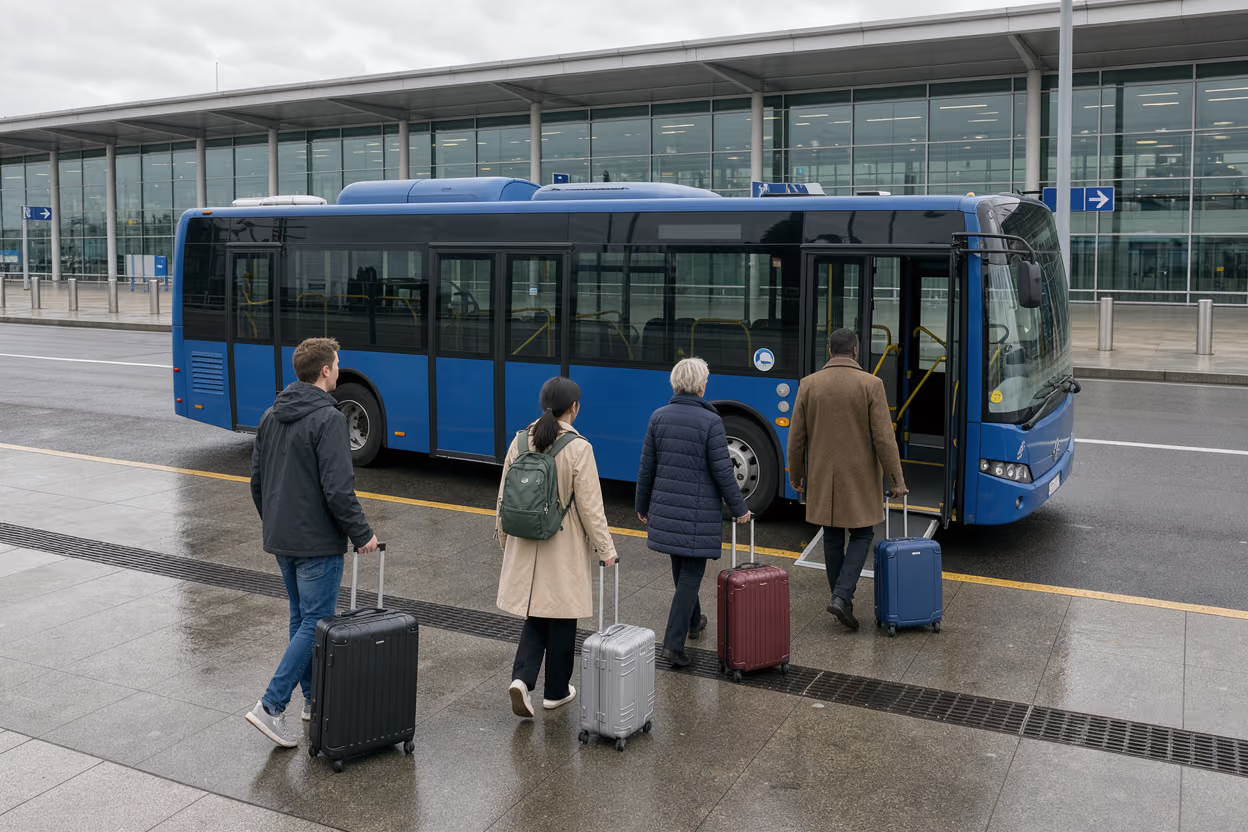
- At Terminal 2, follow the public-transport signs to the 100E stop outside the terminal.
- Buy the special 100E ticket in BudapestGO, at a BKK machine, or onboard through Budapest Pay&GO. Don’t board expecting an ordinary BKK single ticket to work.
- Keep your ticket or digital confirmation handy for inspection.
- Get off at Kálvin tér for metro M3 or M4 connections, or continue to Deák Ferenc tér for M1, M2 and M3 and other central connections.
Step-by-step: take 200E and connect to metro M3
- Board 200E at the airport and ride to Kőbánya-Kispest.
- Transfer to metro M3 toward the center.
- Use a valid regular BKK ticket or pass. Validate a paper single ticket as required when boarding; inspectors can issue a penalty fare for an unvalidated ticket.
This route is a reasonable choice if keeping the fare down matters more than avoiding a transfer. With several large suitcases, the 100E or a car is usually less of a hassle.
Step-by-step: book a taxi or Bolt
For a taxi, follow the signs to the designated official airport taxi desk or rank outside Terminal 2. Confirm that the meter is running, and ask for a receipt at the end of the ride.
For Bolt, book through the app, follow its pickup instructions, and match the vehicle, license plate and driver to the details shown before getting in. Save your hotel address in the app or have it written down—particularly useful if your accommodation is on a narrow street or in a pedestrian zone.
100E vs Bolt vs Official Taxi: Time, Comfort and Best Use
100E: direct, frequent and ticket-specific
The 100E operates around the clock. Departures are generally every 6–10 or 7–10 minutes during the day, about every 10–15 minutes in the morning and evening, and around every 30–40 minutes overnight. It’s a strong choice if your hotel is near Kálvin tér or Deák Ferenc tér, or if you can make an easy connection from one of them.
Many repeat visitors prefer it for a simple reason: it is direct, predictable, and much cheaper than a car for one or two people. The main catch is the special ticket. Don’t confuse the 100E bus in Budapest with the 200E; their fares and routes are different.
Bolt: book in the app and check the live price
Bolt is a practical option when you want a car but prefer seeing the fare before you confirm. Prices are dynamic, and traffic can still make the ride slower. At the airport, use the pickup details in the app rather than following someone who offers to drive you.
Official taxi and Főtaxi: use the designated airport process
Official airport taxis are metered. Use the designated desk or rank, confirm the meter is on, and keep the receipt. For searches about Főtaxi Budapest, focus on the airport’s current taxi instructions rather than relying on a company name alone: use the designated official process and don’t accept unsolicited offers.
Airport Taxi and Transfer Mistakes to Avoid
Do not accept an unbooked ride or airport tout
Skip drivers soliciting passengers inside or outside the terminal. Go to the official taxi desk or rank, or arrange a ride yourself through an app. Before entering a Bolt, check the license plate, vehicle and driver against what the app shows.
Do not confuse 100E with 200E
The 100E requires its special airport-shuttle ticket. The 200E uses regular BKK tickets or eligible passes and connects with metro M3 at Kőbánya-Kispest. Paper single tickets must be validated as required; riding with an unvalidated ticket can mean a penalty fare.
Check private-transfer terms before paying
A pre-booked Budapest airport transfer can be useful for a group, a child seat, or an arranged meeting service. Before paying, check the all-in price, cancellation terms, pickup point, luggage limits and any child-seat requirements. Compare that total with a Bolt fare and the typical official taxi estimate—not just an attractive headline price.
Leave extra road time during weekday commuting periods, major events and busy travel seasons. A fixed pickup may be reassuring, but it doesn’t make the road clear.
Which Airport-to-City Option Is Best for Your Arrival?
Choose 100E for the simplest low-cost central ride
Take the 100E if you want a direct route and can reach your accommodation easily from Kálvin tér or Deák Ferenc tér. It also runs overnight, though departures are less frequent then. For most solo travelers and couples staying centrally, this is our first choice.
Choose 200E plus metro for the lowest regular-fare route
Choose 200E and metro M3 if you already have a suitable regular BKK ticket or pass, want to minimize transport costs, and don’t mind transferring with your bags. It’s the budget route, not the easiest one.
Choose a taxi, Bolt or pre-booked transfer for door-to-door service
Choose a car for a late arrival with heavy luggage, a family trip, or a hotel far from useful transit stops. Compare Bolt’s live fare with the metered taxi estimate, and book a private transfer only when its meeting arrangements or group-specific needs justify the quoted price.
Frequently asked questions
How much is a taxi from Budapest Airport to the city center?
BKK gives a typical official metered fare of about 12,000 HUF for the approximately 21 km trip. Traffic affects the final amount, and a 2,100 HUF airport base fare applies from August 2026. Treat the estimate as a guide, not a fixed quote.
Is the 100E bus in Budapest worth taking?
For many solo travelers and couples, yes. It runs 24/7 to Kálvin tér and Deák Ferenc tér, takes about 40 minutes in normal conditions, and costs around 2,500 HUF for one trip in 2026. It’s especially convenient if your hotel is near either stop.
Can I use a regular Budapest ticket on the 100E?
No. You need the special 100E ticket or, if eligible, the 1,000 HUF add-on for specified passes. A regular ticket or eligible pass can be used on 200E under its conditions.
Is Bolt or a taxi better than 100E from Budapest Airport?
The 100E is usually the lower-cost direct option to central stops. Bolt and official taxis offer door-to-door convenience; check Bolt’s live fare and expect a taxi’s metered total to vary with traffic. If you’re traveling with several people, compare the car price rather than assuming the bus is automatically cheaper overall.
Is Főtaxi Budapest the official airport taxi?
Check Budapest Airport’s current taxi information rather than relying on a brand name alone. At the airport, use the designated official taxi desk or rank, confirm that the meter is running, and request a receipt.
Is there public transportation from Budapest Airport late at night?
Yes. The 100E operates 24/7, with less frequent departures overnight. The 200E also usually runs around the clock; check BKK for exact departures and any temporary service changes.
Should I take an Uber, Bolt or an unbooked taxi at Budapest Airport?
Use an app ride only if the service is available to you, and book it in the app; check the vehicle and driver before boarding. For a taxi, go to the designated official desk or rank. Avoid unbooked drivers offering rides at the terminal.
For most visitors, the simplest Budapest Airport to City Center trip is the 100E: direct, available overnight and reasonably priced with its special ticket. Use 200E plus metro M3 to spend less if you’re happy to transfer, or compare Bolt with an official metered taxi when door-to-door service matters. Check BKK’s latest fares and notices before you go.
Related guides
- Budapest Public Transport Guide
- Things to Do in Budapest
- Budapest 3 Day Itinerary
- Budapest airport transfers
- Transport tickets and passes