Other names
Hungarian Agricultural Museum, also called Vajdahunyad vára
Founded
1896
Designed by
Ignác Alpár
Did you know?
- First created for Hungary’s Millennium Exhibition in 1896, Vajdahunyad Castle was rebuilt in stone, a project completed by 1908.
- Hungarian architectural landmarks from different periods inform the castle’s varied design, which showcases the nation’s heritage.
- Among the museum’s highlights is the full skeleton of Kincsem, the racehorse who won all 54 of her races, a record that made her the world’s most successful.
Plan your Vajdahunyad Castle ticket booking
Budapest: Vajdahunyad Castle and Hungarian Agricultural Museum Entry Tickets
What makes Vajdahunyad Castle worth seeing?
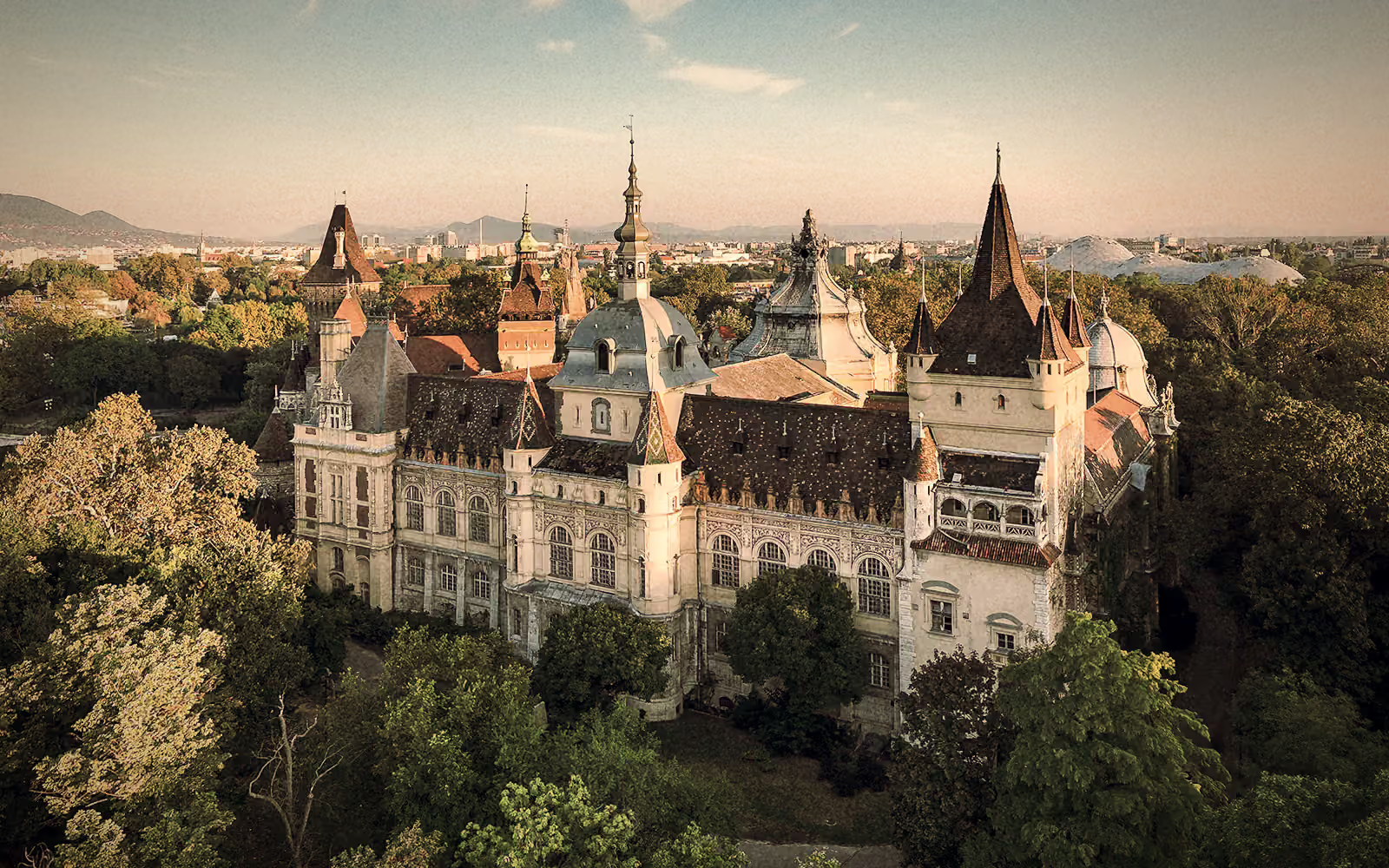
Vajdahunyad Castle is an unusual Budapest attraction that can be easy to miss. It looks like a medieval castle but was built in 1896 as a temporary exhibition structure, not as a royal or noble residence. That contrast makes the building interesting.
Four architectural styles spanning eight centuries of Hungarian building history come together in this lakeside complex. Inside, the museum presents one of Europe's most extensive collections on agricultural and rural history, from Neolithic farming tools through 20th-century machinery. The grounds, courtyards, and lake welcome visitors free of charge throughout the year, with summer boating, winter ice skating, and festivals in every season.
Make the castle part of a City Park outing in the morning or afternoon: Heroes' Square and Széchenyi Thermal Bath are both a 10-minute walk away. Those keen on Hungarian history or architecture may prefer to set aside time specifically for the museum and tower views. Even without a ticket, spend an unhurried hour in the courtyard to see the Anonymus statue, the Ják Chapel facade, and the hidden Dracula carving.
How Vajdahunyad Castle came to be
A building to celebrate a nation 🎉
In 1896, Budapest marked 1,000 years of Hungarian history. For the Millennial Exhibition in City Park, architect Ignác Alpár was asked to tell that story in a single building.
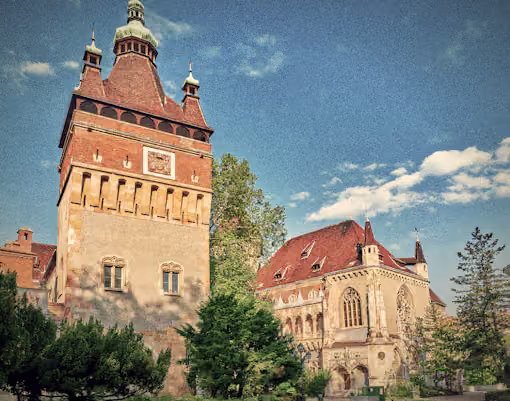
Alpár designed Vajdahunyad Castle in four styles: Romanesque, Gothic, Renaissance, and Baroque. Each section is based on a Hungarian landmark. The Gothic wing, modelled on Hunyadi Castle in Transylvania, gave the complex its name.
The castle was built for the exhibition and was not meant to be permanent. Its wood and plaster structure went up quickly, but visitors liked it so much that it was kept rather than demolished.
From short-term exhibit to lasting landmark 🏗️
The original structure began to deteriorate and was demolished in 1899. By then, the public wanted the building to stay.
Alpár revised the design for a permanent stone reconstruction, built between 1904 and 1908. Emperor Franz Joseph I led the reopening, when the exhibition building became a permanent landmark.
The castle was damaged during World War II and again in the 1956 uprising. Restoration work repaired the damage after both events.
The Hungarian Agricultural Museum inside 🌾
The castle housed the Hungarian Agricultural Museum, founded in 1896, alongside serving an architectural role.
Today, the museum is one of Europe’s largest of its kind. It covers farming and livestock, wine-making, forestry and fishing, and food production. Its exhibits include prehistoric tools, industrial machines, and interactive displays.
The unbeaten champion 🐎
Kincsem, Hungary’s celebrated racehorse, is a popular exhibit. She raced between 1876 and 1879 and won all 54 races she entered. No other horse has matched her record. Her skeleton is displayed in the Baroque wing, evoking Hungary’s rural heritage and sporting past.
Explore the architectural styles of Vajdahunyad Castle
Architect Ignác Alpár designed Vajdahunyad Castle as a timeline of Hungarian architecture, divided into four sections. Walking around the grounds takes you through eight centuries of design in less than an hour, with each turn revealing a different period.
Buildings from the Romanesque period, 11th-13th century
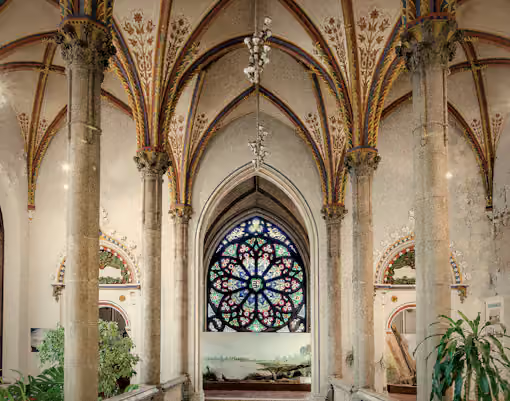
The Ják Chapel portal anchors this section. It is a replica of the 13th-century Church of Saint George in Ják, with carved stone columns, sculpted figures and rounded arches. Inside the chapel, the quiet, solid atmosphere reflects early medieval architecture.
Explore Gothic design from the 14th-15th century
The Gothic wing draws on Corvin Castle in Transylvania. It features tall towers and battlements, the Apostles’ Tower, the castle’s highest point, and a vaulted Knights’ Hall. The design is both imposing and defensive, meant to impress and intimidate.
Renaissance features of the 15th-16th century
This section draws on the palace of King Matthias Corvinus at Visegrád and reflects the period when Hungary looked to Italy for artistic influence. Its loggia features arched colonnades and open, balanced spaces, giving the section a lighter feel.
Baroque architecture of the 17th-18th century
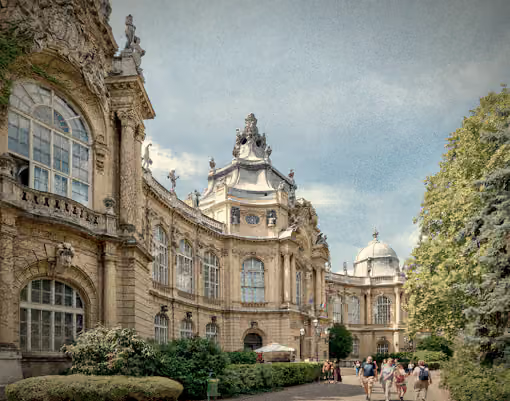
The Baroque section is the largest, and visitors are likely to spend the most time here. Modelled on the palace of Prince Paul Esterházy I, it now houses the Hungarian Agricultural Museum. Inside are long gallery corridors, high ceilings and soft lighting for exhibitions.
Nearby attractions in City Park
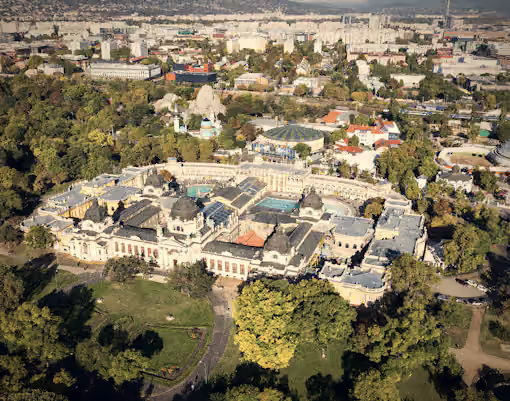
Within Budapest, Vajdahunyad Castle occupies a central spot in City Park (Városliget), a major urban green area where many of the city's sights are clustered. These attractions can all be reached on foot without a long walk:
- Heroes' Square (Hősök tere): A 5-minute walk away, the square is home to the Millennium Monument, Budapest's largest single monument. Its figures include the Seven Chieftains of the Magyar tribes and fourteen Hungarian kings and leaders. There is no charge to visit the square.
- Széchenyi Thermal Bath: Reaching this bath takes 10 minutes on foot. It ranks among Europe's largest thermal bath complexes and has 18 pools filled by natural geothermal springs. The City Park attraction is popular, and advance booking is available.
- Museum of Fine Arts: An 8-minute walk brings visitors to Hungary's main European fine art collection, which spans Egyptian antiquity through the 20th century. The museum stands right on Heroes' Square.
- Budapest Zoo and Botanical Garden: This City Park zoo is a 10-minute walk away. Founded in 1866, it is among the world's oldest.
- House of Music Hungary: The venue is an 8-minute walk away. Japanese architect Sou Fujimoto designed it as a contemporary space for concerts and exhibitions focused on Hungarian music history; it opened in 2022.
Answers to Common Questions About Vajdahunyad Castle
Do I need a ticket to enter the castle?
You can visit the castle courtyard for free at any time, except during festivals that require tickets. A ticket is required to view the museum exhibits or climb the tower.