Other Names
LAM, Budapest
Founded
2022
Founder
Featured figure: László L. Laki

Worth knowing
- The Light Art Museum Budapest, also known as LAM, is one of the world's largest museums devoted to light as an art medium.
- The museum uses dynamic lighting to transform static artworks with colour and movement.
- The museum often works with artists from around the world. Its exhibitions bring together different perspectives and styles.
Tickets for the Light Art Museum
Budapest: Light Art Museum Entry Tickets
Budapest: Lumina Light Park Wonderworld Entry Tickets
Combo (Save 5%): Hungarian Parliament Audio Guided Tour + Light Art Museum Tickets
Should you make time for the Light Art Museum?
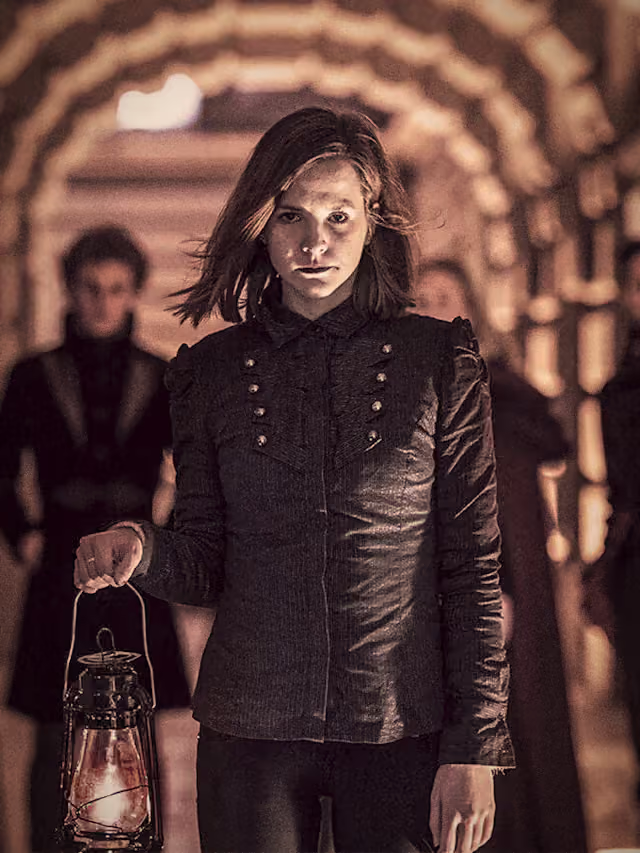
- Your eyes may need a moment to adjust inside the Light Art Museum. The old market hall soon begins to glow: beams cut through haze, coloured discs cast moving shadows, and a huge zeppelin-like projection chamber draws visitors in like a portal.
- In the 19th-century market hall, LAM uses height, darkness and sound to make light part of the architecture and the art. The effect can be disorienting.
- The installations draw attention to how light shapes space, mood and time. Few museums in Budapest combine visual stimulation with the chance to think about how we perceive our surroundings.
- Consider skipping it if you dislike dark exhibition spaces, flashing effects or conceptual contemporary art.
Get ready for your Light Art Museum visit>
What can you see at the Light Art Museum?

The market hall from earlier days
Look at the former Hold Street Market Hall before the artworks. Its height, arches and stall-like layout help explain the installations' theatrical feel. The building is part of the experience, not just a container for the works.
Exploring the Light Art Museum: What to Do
- For the principal installations and time for photos, allow 90 minutes; reading the wall texts and staying longer in the projection works brings the visit to about 2 hours.
- Although you can set your own pace, timed admission keeps the start orderly. Get there a few minutes before your slot and enter the central hall first, giving your eyes time to adapt and letting the initial impact take hold.
- After the hall, make your way around the former stall-like side rooms, taking more time with their quieter pieces. Finish by returning to the large-format works before departing.
- Must-see: Make time for the zeppelin projection dome, the glass-disc environment by Olafur Elíasson, and Anthony McCall’s solid-light installation.
- Optional: You can also explore the smaller, concept-heavy side galleries and read more labels. These add context but may extend the visit by 30 to 45 minutes.
- Guided vs. self-paced: Because the route is intuitive, visitors can readily follow it on their own. Choose a guided tour for a clear explanation of the ecological and posthuman ideas connected to works such as Saraceno’s web and the parrot installation.
A Short History of the Light Art Museum
- 1880s: Hold Street Market Hall is built in central Budapest. Its vaulted structure remains part of the visitor experience today.
- 20th century: The hall operates as a market and becomes part of everyday commercial life in the city center.
- Early 21st century: As the old market’s role declines, the building is considered for a new use rather than demolition.
- 2022: The Light Art Museum opens in the former hall as a 2,000 m² venue for immersive contemporary art based on light.
- 2025 to 2026: Changing exhibitions, including Phantom Vision and More Than Human, bring nearly 40 international artists into the space.
- Today: LAM is one of Budapest’s distinctive contemporary museums, combining historic architecture with research-based digital installations.
The Light Art Museum’s Architecture
Style
The former industrial market hall now houses a black-box museum. Its original space feels open and civic, while darkness and projections make it feel like a cathedral for moving light.
Materials
The hall’s brick vaults, columns, and masonry surfaces catch, absorb, and reflect color differently as visitors move through the galleries.
Structure
The former market’s open footprint accommodates a 30-meter (98-foot) zeppelin projection environment without making the space feel cramped. The result is a strong sense of scale.
On the ground
Installations reach across arches, curved ceilings, and former stall-like bays, bringing the building’s features into view. Its architecture remains part of the artwork.
Transformation
No single star architect defines the museum. Adaptive reuse converted a 19th-century Budapest market hall into a contemporary light-art venue while preserving its historic character.
Who founded the Light Art Museum?
László Laki, Viola Lukács, Márton Orosz, and László Zsolt Bordos founded the Light Art Museum Budapest in 2022. They converted Budapest's historic Hold Street Market Hall into a museum for light-based art instead of building a new venue. Győző Czigler designed the market hall in the 19th century. Its historic structure was preserved as the space was adapted for immersive exhibitions of contemporary digital art.
Why visit the Light Art Museum again?
LAM changes its research-led exhibitions over time, featuring new artists and themes rather than a single permanent visual loop. One season may explore ecology, non-human intelligence, and posthumanism; another may focus on perception, illusion, or moving-image experiments. The market hall remains the same, but the ideas behind the exhibitions and many of the installations change, making a return visit on another Budapest trip different from the first. If you enjoy contemporary art that changes from year to year, plan your visit.
Common Questions About the Light Art Museum
Is the Light Art Museum worth a visit?
Yes. It suits visitors looking for a contemporary Budapest museum rather than a classical one. The central projection chamber gives the visit a sense of scale, and timed Light Art Museum admission makes the experience smoother than at many major attractions.