Alternative Names
Budapest Opera House
Founded on
1884
Founded by
Miklós Ybl
Did you know?
- The Hungarian State Opera auditorium is known for its acoustics. In Europe, only Milan’s La Scala and Paris’s Palais Garnier rank higher.
- The central chandelier originally weighed 3 tons and used 500 gas lamps. It now holds 200 electric bulbs and weighs about 2 tons.
- Károly Lotz’s ceiling fresco, 'The Apotheosis of Music', crowns the auditorium. It is the largest secco painting in Hungary.
An Opera House built for excellent performance
Opened in the 19th century as an expression of cultural independence, the Hungarian State Opera was designed with performance quality in mind. Its carefully calibrated acoustics and sightlines keep the stage visually intimate from every seat. Singers and orchestras can perform at full expressive range without amplification, producing clear sound. The Opera House also presents elite productions and offers guided tours with behind-the-scenes access to Budapest’s cultural life.
A look inside the Hungarian State Opera
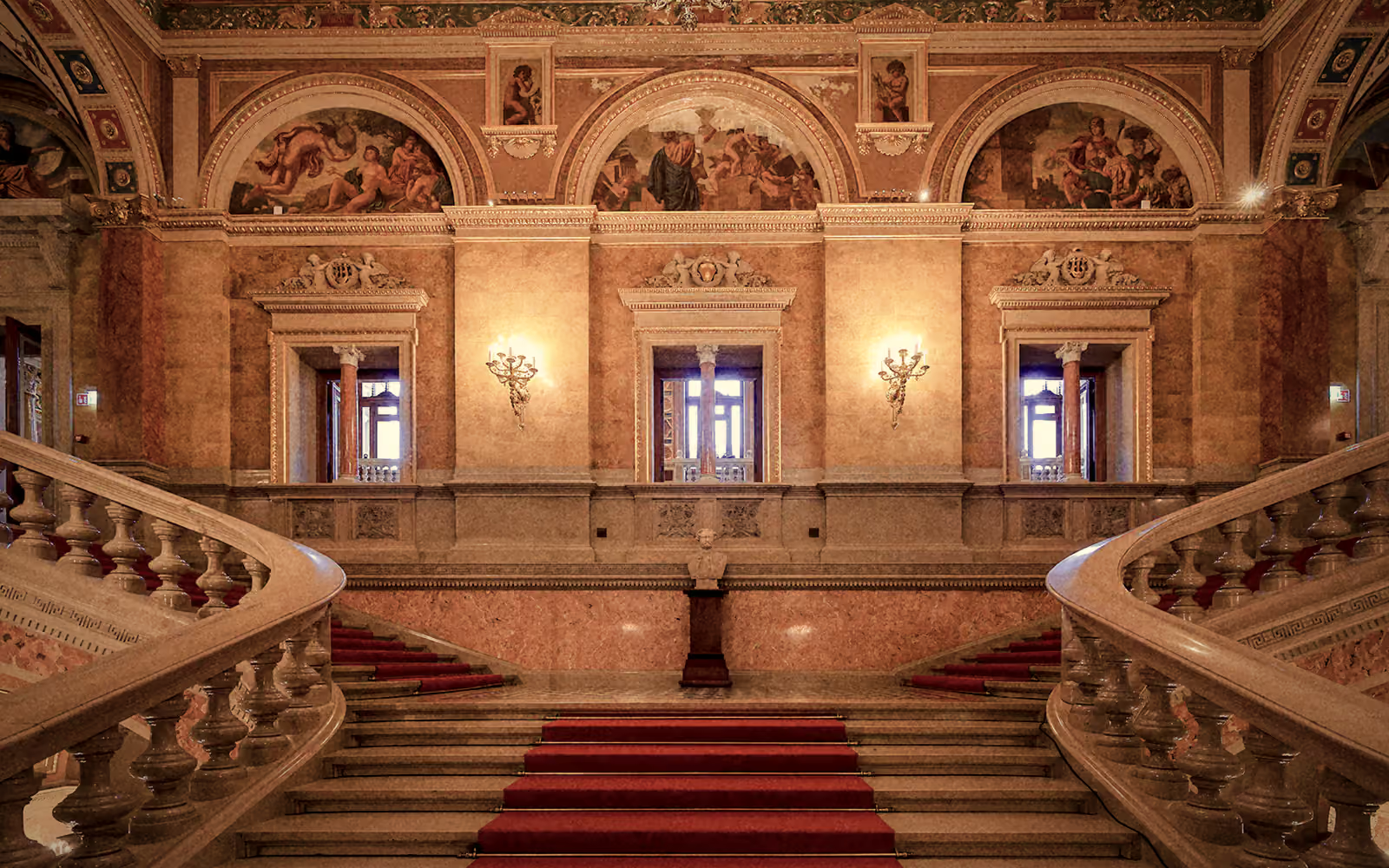
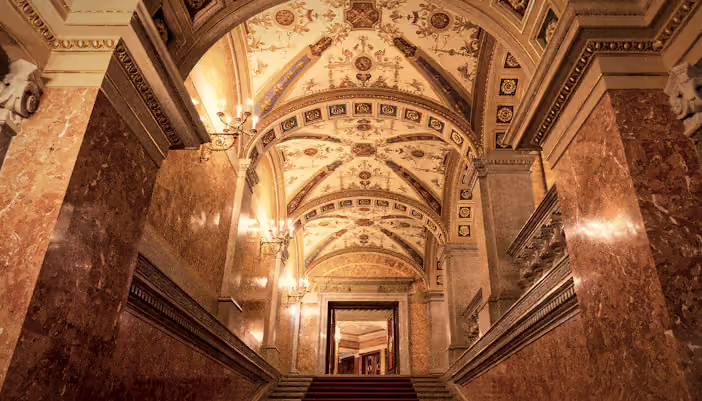
The staircase and frescoed foyers
The formal staircase and painted foyers welcomed visitors before performances and reflected Budapest’s cultural aspirations in the late 19th century. The spaces also served as places for social gatherings, where the city’s elite met and displayed their status.
A century and a half on the Hungarian stage
- 1875: Construction of the Hungarian State Opera gets underway, led by architect Miklós Ybl. The commission forms part of Budapest’s development as a modern European capital.
- 1884: The Opera House opens on September 27, 1884, with Emperor Franz Joseph I in attendance. It soon becomes Hungary’s leading opera venue.
- 1888 to 1891: Composer Gustav Mahler serves as music director. He raises performance standards, adds international repertoire and shapes the Opera House’s artistic discipline.
- Early 20th century: The Opera House becomes a major venue for Hungarian-language opera and ballet, using performances to support national cultural identity.
- 1945: The Siege of Budapest damages the building. Performances stop temporarily, and the Opera House’s future is at risk.
- 1951: The Opera House reopens after extensive repairs and resumes its work as a state-supported cultural institution in postwar Hungary.
- 1984: Restoration for the building’s 100th anniversary brings updated stage technology while preserving its historic interiors and acoustics.
- 2002: UNESCO inscribes Andrássy Avenue and its historic surroundings as a World Heritage Site. The Opera House is part of the site, which includes Budapest’s prominent 19th-century boulevard.
- 2017 to 2022: The Opera House undergoes its largest renovation to date. The work upgrades infrastructure, restores original design details and brings the building in line with modern safety and performance standards.
- 2022: The restored Opera House reopens to the public. It is among Europe’s most acoustically refined and historically significant opera houses.
Miklós Ybl: the architect who shaped the Opera House
During a period of intense national self-definition, Miklós Ybl, among Hungary’s most influential 19th-century architects, received the commission to design the State Opera. In this work, he brought refined ornamentation together with technical discipline, treating the building as both a national commission and a defining test of his craft. Acoustics, proportion, and practical performance needs receive as much consideration as visual grandeur.
How the Opera House carries the human voice
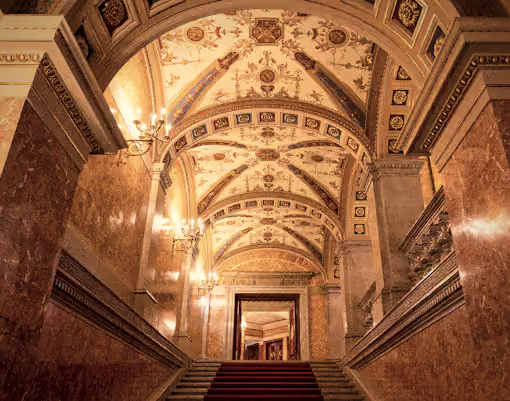
Italian Renaissance influences in Neo-Renaissance design
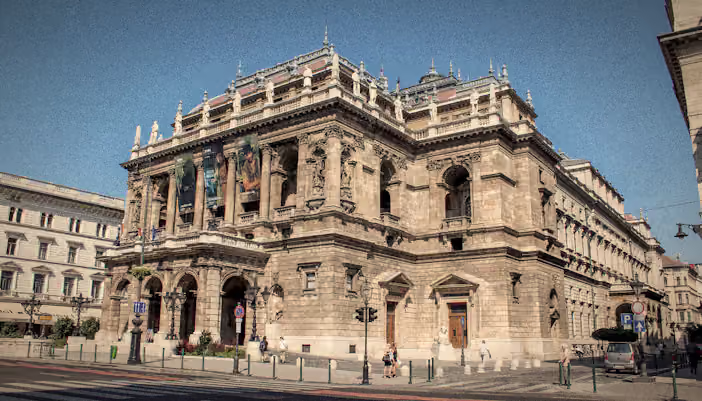
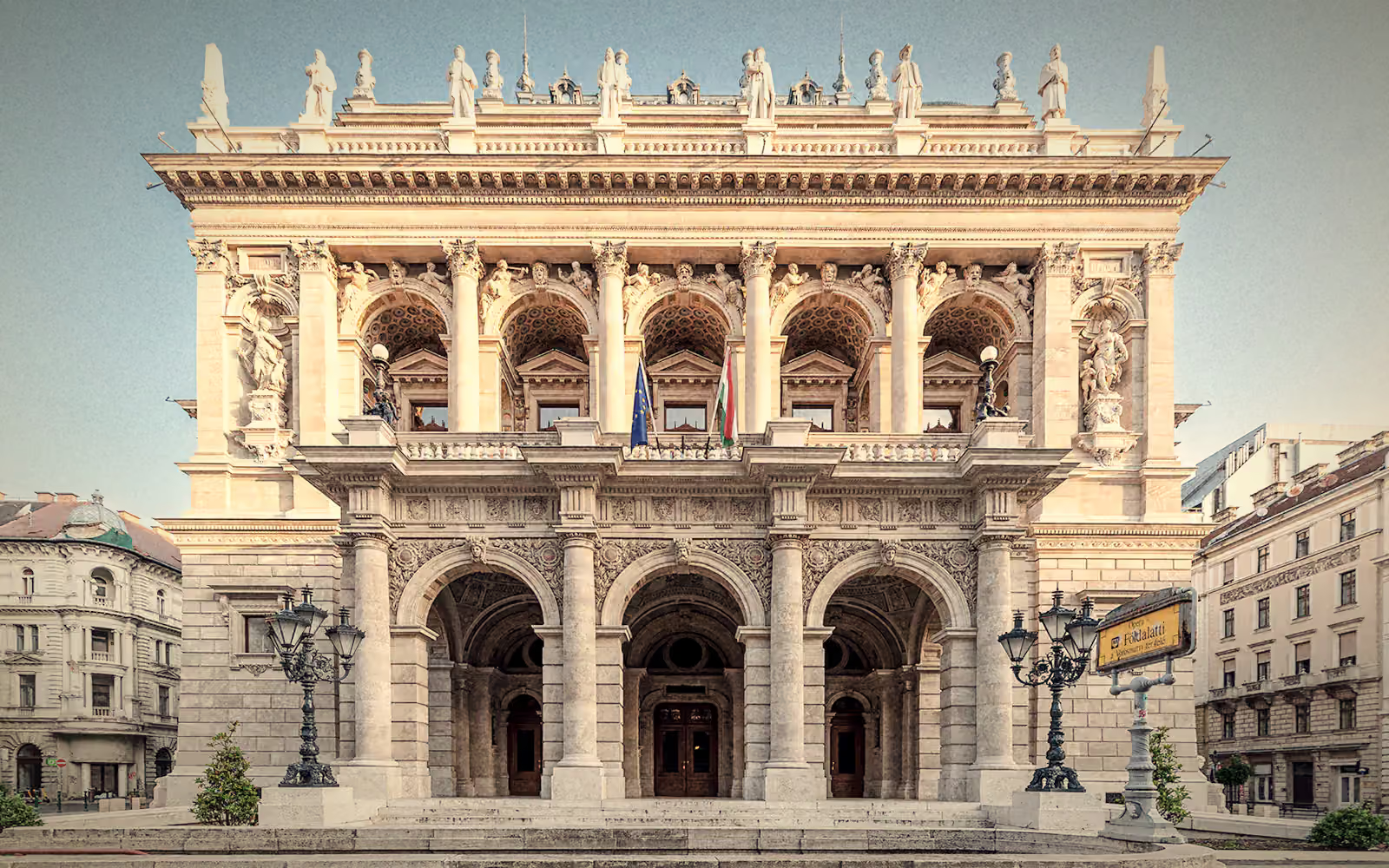
Drawing on Italian Renaissance models, the Opera House follows a Neo-Renaissance style. Its features include symmetrical facades, arched windows, and classical proportions. Rather than covering broad structural surfaces with ornament, the design reserves decoration mainly for entrances, windows, and cornices.
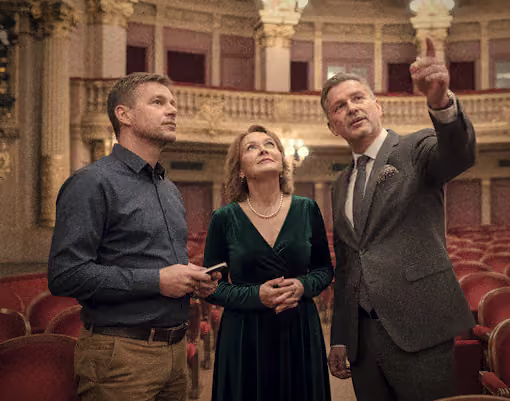
Shaping the auditorium for sound
Sound projection is supported by the auditorium’s proportions. Curved walls and a horseshoe-shaped layout help unamplified voices reach listeners evenly. Interior surfaces use chiefly hard materials, including plaster, wood, and stone, which limit sound absorption.
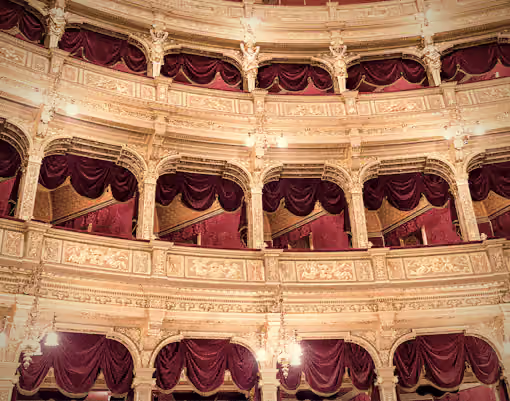
Compact interiors and tiered seating
Despite the exterior’s formal, ceremonial scale, the interior volumes are comparatively compact. By placing Seating is arranged in stacked tiers, the layout preserves direct sightlines and minimizes the distance from audience to stage.
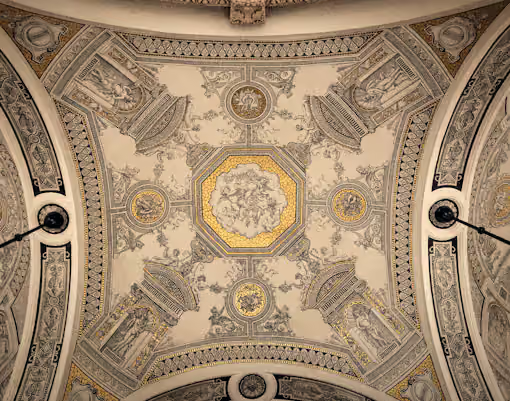
Decoration that forms part of the structure
The building incorporates columns, arches, and relief panels as structural features, rather than as superficial additions. Along with giving the interior its visual character, these details affect acoustics and circulation.
What visitors want to know about the Hungarian State Opera House
What was the purpose of building the Hungarian State Opera in the 19th century?
Its construction affirmed Hungary’s cultural independence within the Austro-Hungarian Empire and sought to rival Europe’s leading opera houses for artistic quality.